

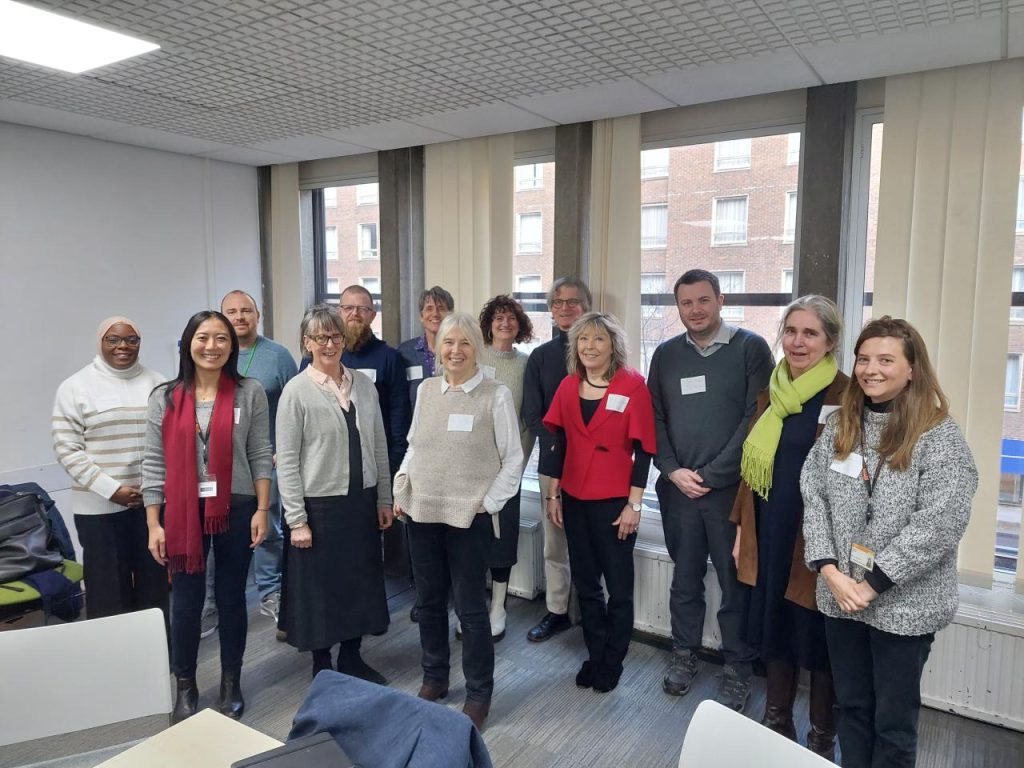
The Oswin Project is a founding member of the UCL Centre for Education and Justice, representing a significant partnership focused on advancing educational opportunities for prisoners and rehabilitation through education. This foundational collaboration brings together the Oswin Project’s practical experience working with individuals involved in the criminal justice system and UCL’s academic research capabilities.
As a founding member, the Oswin Project has been instrumental in shaping the Centre’s vision and strategic direction, working alongside Co-Directors Professor John Vorhaus and Dr Keri Wong. The Centre, formerly known as the Centre for Education in the Criminal Justice System (CECJS), maintains an exclusive focus on education and the criminal justice system, serving as a knowledge hub where practitioners, policymakers, and researchers collaborate to collect, improve, and disseminate the best and most promising evidence and practice in the field.
The partnership centers on several key initiatives aligned with the Centre’s core engagement areas:
- Research collaboration that takes a broad view of education—including formal, informal, and non-formal education, training, and learning—to evaluate the impact of educational interventions on reducing reoffending and supporting successful reintegration
- Development of evidence-based curricula specifically designed for prison education contexts, recognizing prisoners’ rights as citizens and learners entitled to high-quality and diverse learning opportunities
- Training programs for educators working within correctional facilities
- Knowledge exchange between practitioners and academics to improve both research and practice
The collaboration adopts a developmental approach to understanding the relationship between education, offending, and desistance across the life course as a whole. Through this founding relationship, the Oswin Project contributes valuable frontline experience and insights while benefiting from UCL’s academic expertise and research methodologies. The partnership represents an important bridge between academic theory and practical application in the field of prison education.
Both organizations share a commitment to the principle that education can be transformative for individuals in the criminal justice system, providing pathways to meaningful employment, personal development, and reduced likelihood of reoffending.